The tricky bits. In good hands.

What I do
Less digital drama. More things that work.
AI for the tedious bits, data you can trust, and systems that keep their promises. Here’s where I can help.
Give the busywork to AI
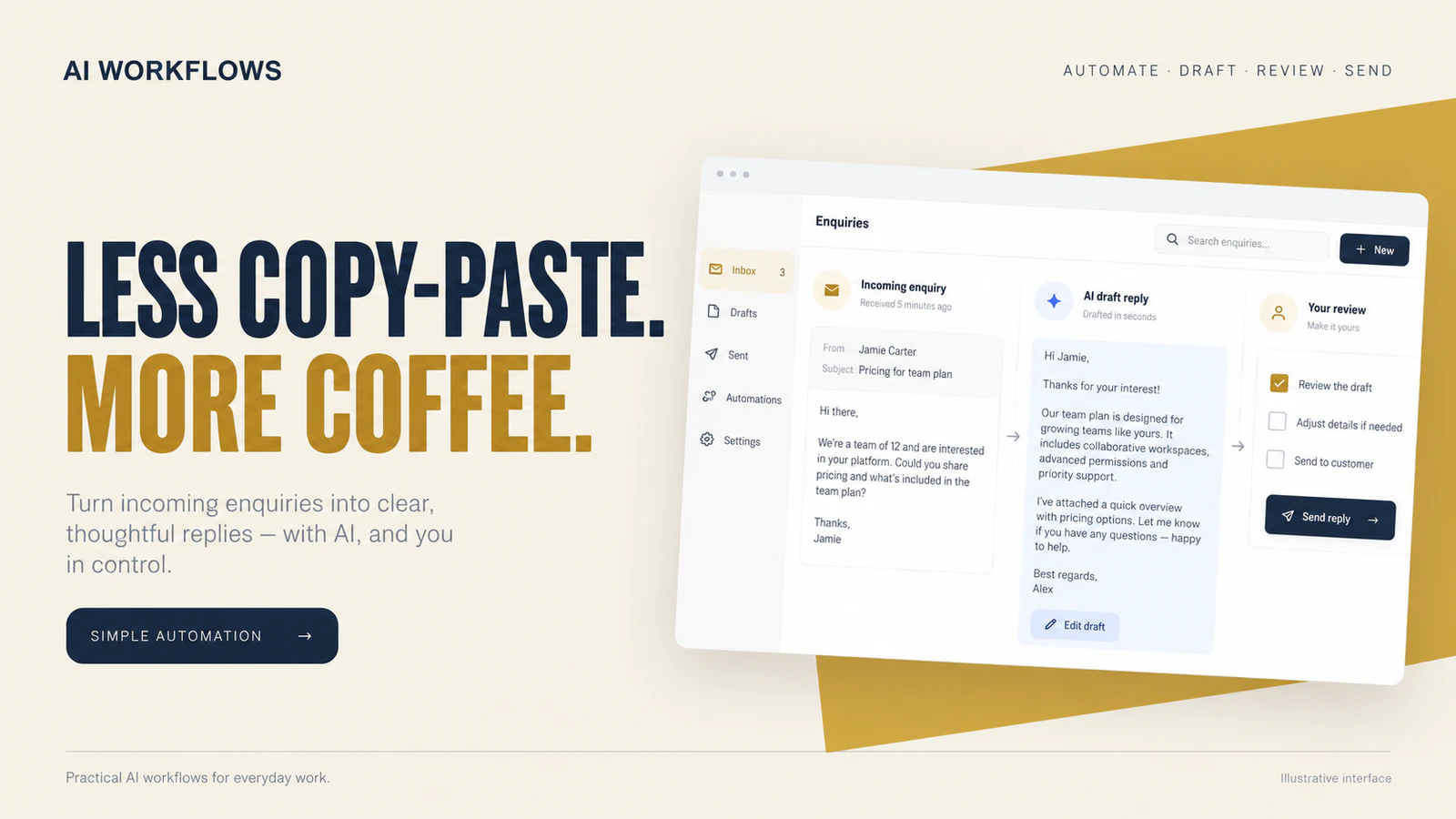
Your team probably didn’t sign up to spend Tuesday copying the same information between five tabs. I help identify the repetitive work worth automating, then connect AI to the tools and information your team already uses. That could mean drafting responses, finding answers in documents, or moving routine tasks along. I build in review steps, sensible checks, and clear handoffs so people can trust the workflow—and keep the final say.
Sort out the plumbing
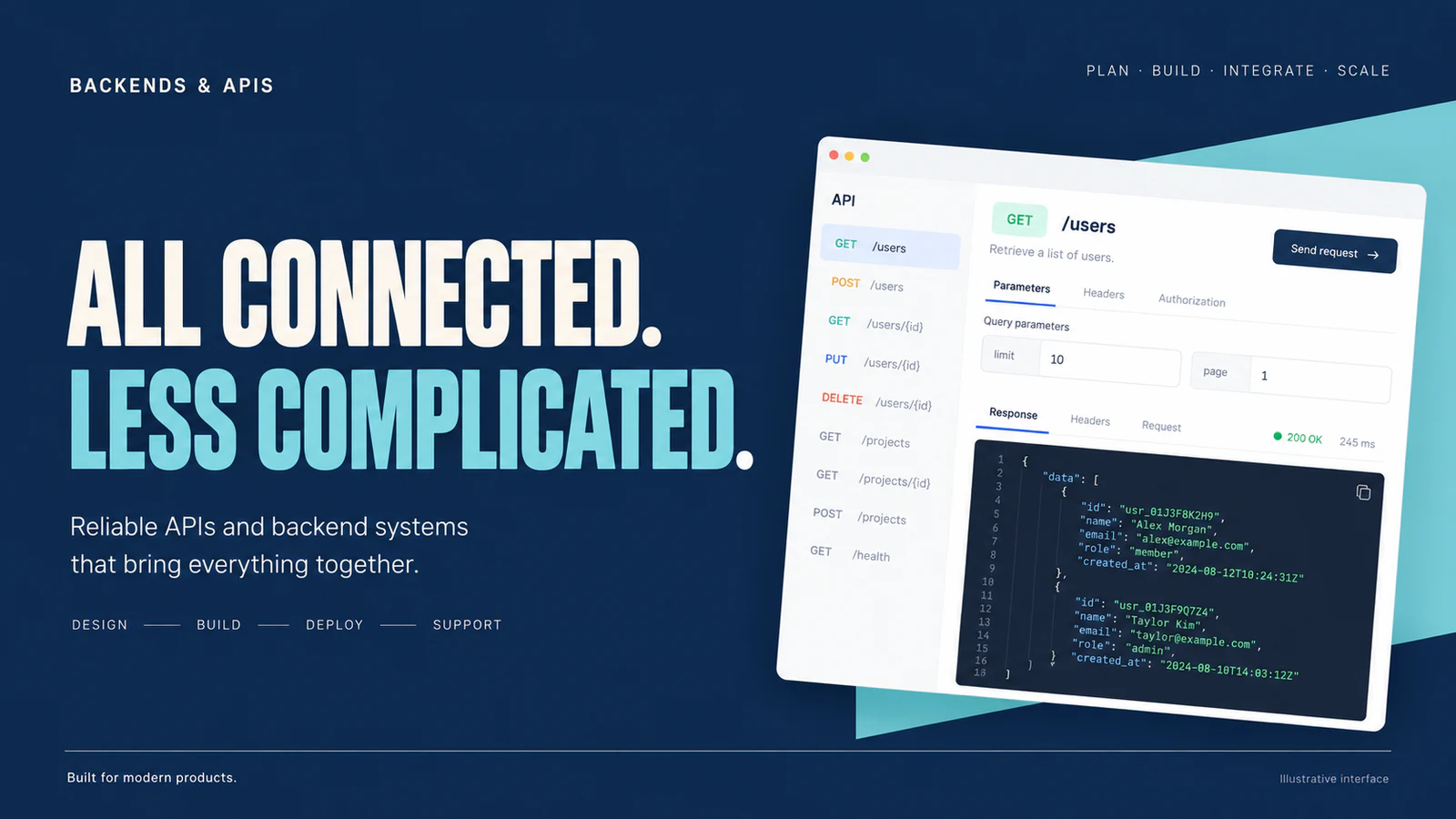
A good backend is a little like good plumbing: you should be able to get on with your day without thinking about it. I design and build APIs, business logic, and database foundations that keep your product’s moving parts connected. I also help existing systems talk to newer tools, with attention to access controls, error handling, and maintainability. The aim is software your users can depend on and your next developer can understand without a treasure map.
End the spreadsheet mystery
If three spreadsheets give three different answers, a fourth spreadsheet is rarely the cure. I help bring scattered data together through practical pipelines, well-structured storage, and checks that catch problems before they reach a report. Then I turn that foundation into dashboards and reporting that answer useful questions. Your team gets a clearer view of where the numbers came from, what they mean, and which version to trust when someone asks, “Are we sure about this?”

Keep launch day launched
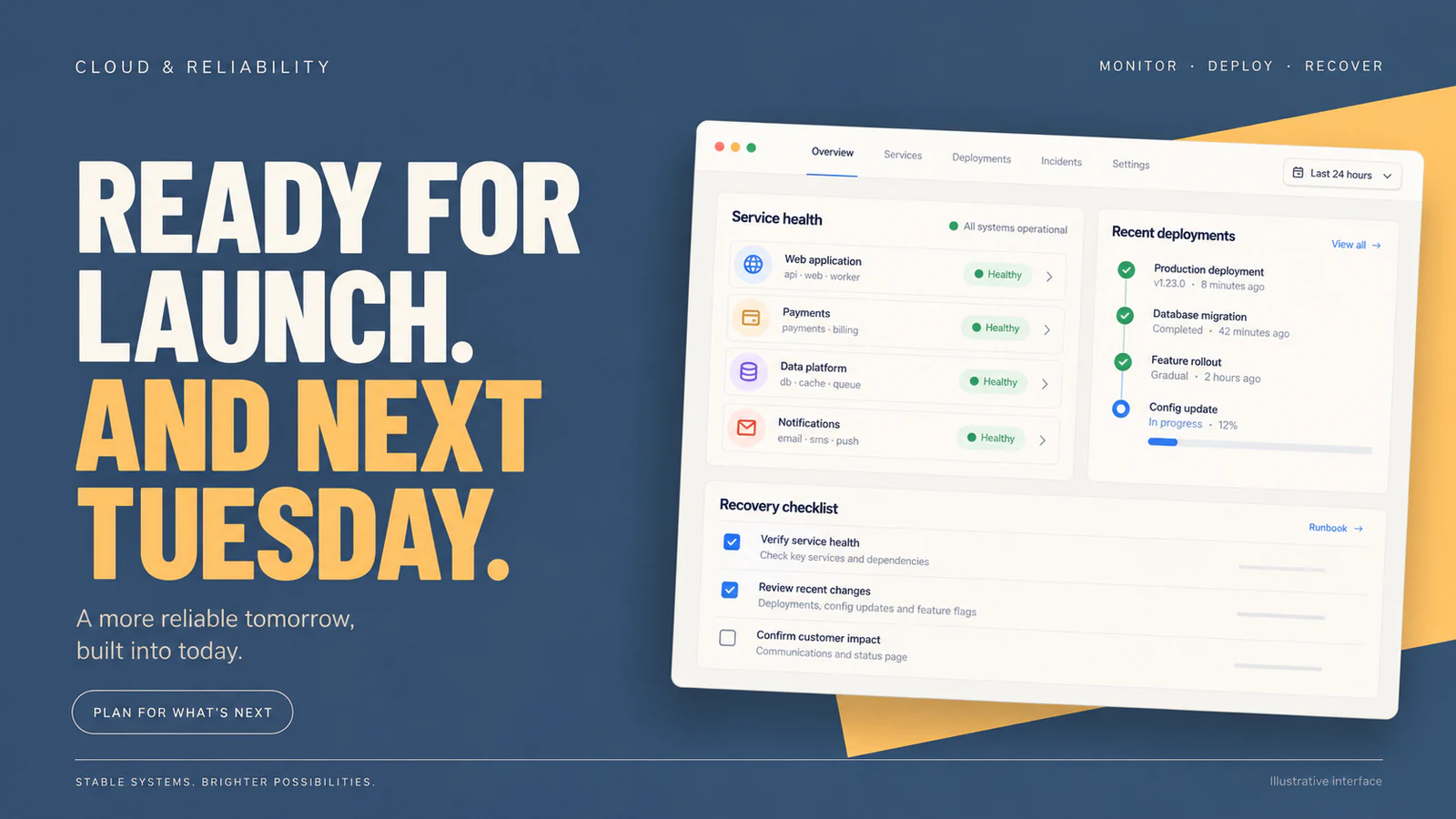
Launch day deserves a celebration. Every Tuesday after it deserves a system that still works. I help teams set up cloud infrastructure, repeatable deployments, monitoring, and recovery plans around how their product actually runs. That means making failures easier to spot, releases easier to manage, and backups useful when they’re needed. I keep the setup understandable for the people maintaining it, so “try restarting it” becomes an option rather than the entire operations handbook.