
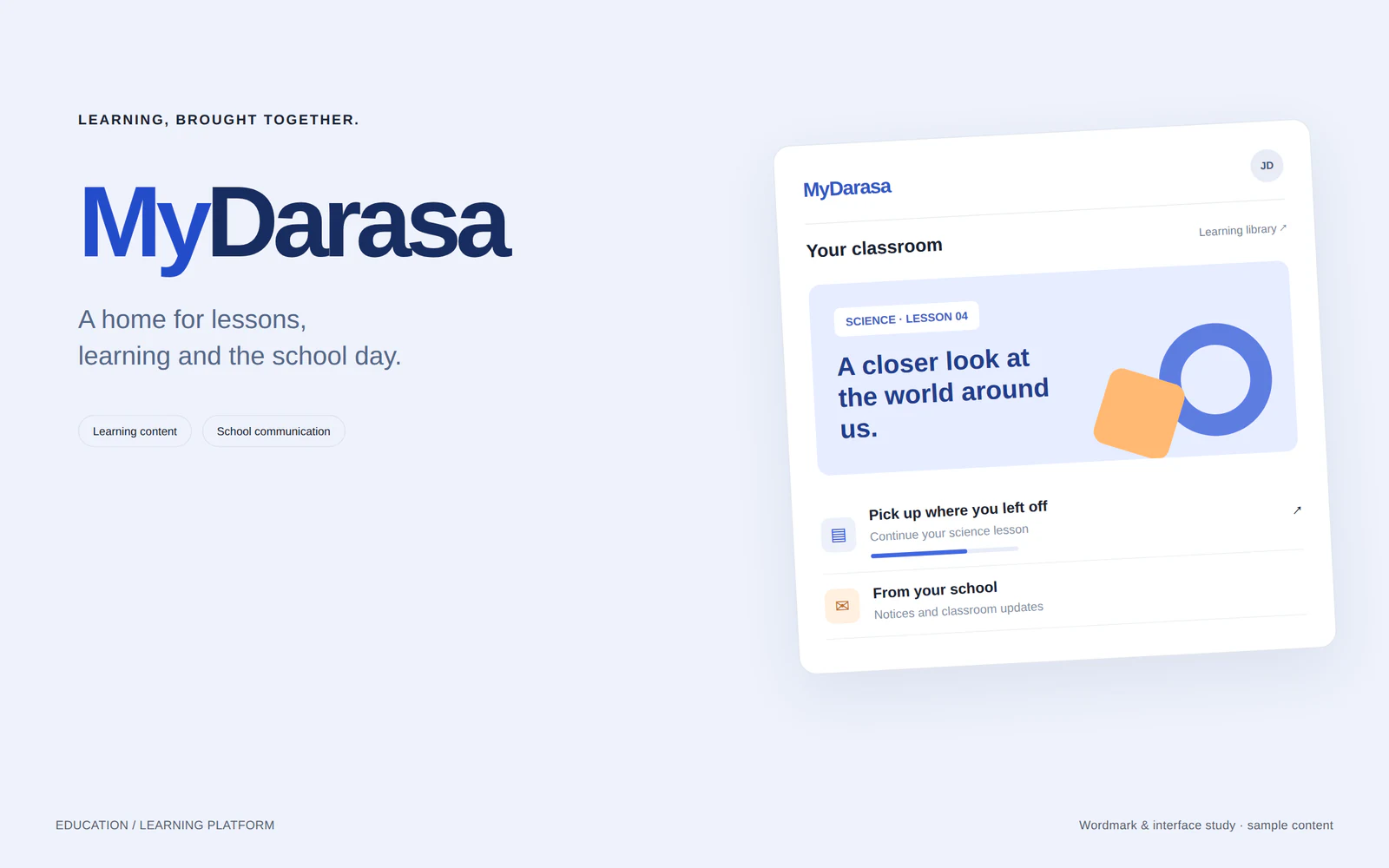
A school platform has to support the everyday work around learning, not just put a library of files on a screen.
Start with the people and their jobs
A school learning platform serves people who arrive with different questions. A learner needs to find the right material and understand what to do next. A teacher needs to share learning resources and follow academic activity. A school administrator needs a clearer view of the institution’s work. Treating every visitor as the same user usually leads to a crowded interface and unclear permissions.
For MyDarasa, the platform was shaped around distinct user roles and the work each role needed to do. That keeps the product model closer to the school’s day-to-day needs than a generic collection of pages.
Keep learning and communication connected
Learning content is only useful if people can find it, understand its context, and communicate about it. When content, updates, and school communication live in unrelated places, people spend time searching and repeating information. A shared digital layer can make those paths easier to follow, provided the underlying content and access rules remain clear.
That means planning for content access, school communication, and academic engagement as connected workflows. The goal is not to add another destination. It is to make the work already happening easier to continue.
Build a foundation that can fit different schools
Schools do not all use the same structure or need the same views. A tenant-aware foundation gives a platform a way to support school-specific needs while keeping information and roles separated. That decision touches the data model, application boundaries, and the way the product handles access from the beginning.
On MyDarasa, the work covered application architecture, backend services, frontend workflows, and production-readiness concerns. Considering those pieces together made it possible to shape a more consistent platform for learning and communication.
A school learning platform works best when its architecture follows the real paths people take: finding content, sharing updates, and keeping academic work moving.